All teams can take advantage of Agile principles and practices to reap benefits. Even non-Agile teams can use cadence to minimize work disruptions.
WHAT is Cadence in Agile?
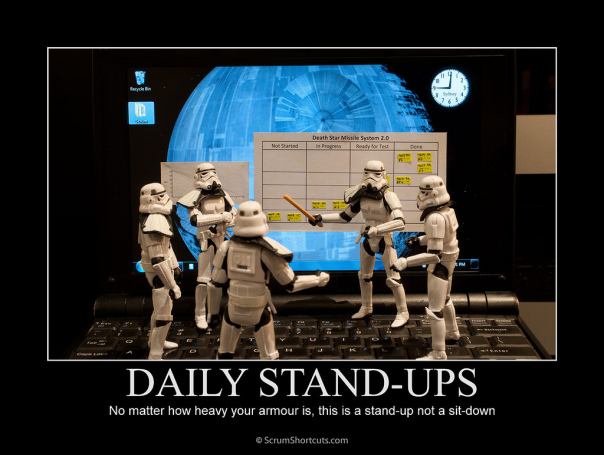
Cadence is a term used to describe a pre-determined schedule of cyclical events. For example, sprint planning happens every 2 weeks (sprint / iteration) on the first day. Sprint demo happens every 2 weeks on the last day. Team stand-up happen every morning at 9:30 AM. In some agile frameworks, this cadence can apply to other activities such as release planning, architecture, program planning, product planning, etc.
The second idea contained here is to combine similar activities into focused sessions. Do you have the same team in 5 project kick-offs each week? Great! Create one session to cover all the projects at once (if possible) allowing the team to be less disrupted and more productive the other time. Do you have 3 different Project Managers chasing your team for task statuses every day? Great! Reserve fixed 30 mins every day for this activity so your team can get real work down the rest of the day.
The third concept is that these meetings are time-capped, as in they have a fixed length of time they have to fit into. That length of time reflects (1) the value of the outcome and (2) the complexity of effort contained (e.g. statuses are short, planning meetings are longer). At the beginning time-caps are hard to manage. Long-term, they also are a method of managing work disruption thus increasing time productivity.
WHY is this used?
Cadence has three big advantages (no matter the framework):
- By scheduling non-production activities at beginning / end of work cycles, you ensure that the middle remains disruption-free. That makes your team more productive and more… well, sane.
- It effectively pre-reserves time in everyone’s schedule so you never have to compete for their attention as much. This means you won’t be running around last minute to find a room or shift everyone’s schedule around (also a time saving).
- Creates a natural pace and order of events that becomes a pattern and a habit… much easier to follow than a constantly changing schedule. This approach is also more sustainable and less stressful.
HOW to take advantage of it?
Look at your common activities, especially ones that are most disruptive to your team’s productivity. Create a cadence by pre-scheduling them at fixed dates / times. For example:
- Project check-ins / statuses in last 30 mins of each day (morning or end of work day). If your team works on multiple projects with multiple project managers you could even do everything together.
- Project intake / kick-off / planning meetings every week on the same day / time.
- Solution design / architecture / UX meetings every week on the same day / time.
- Knowledge transfer / training / innovation activities every month on the same day / time.
- Shared Product / Portfolio Planning meetings every week on the same day / time.
WHO should facilitate these?
The meetings themselves don’t actually have to change. Who leads them / facilitates them doesn’t have to change. Just when they occur (cadence), what they contain (grouping), and how long they take (time-cap) should change.
Disclaimer: Obviously, benefits are more substantial and even cumulative if your team is actually using a complete Agile framework like Scrum or Scaled Agile (recommended). But whether your team is just experimenting, in process of transition, or simply trying to learn… I hope this article helps you on your way.
Image credit: ScrumShortCuts.com
 Adam Outside The Box